Wallpaper vs Paint: Which Is Right for Your Room?
Most people frame this as an either/or. It isn't. Wallpaper and paint are different tools for different jobs — and knowing which job each does better is what separates a considered room from a generic one.
Wallpaper versus paint is not a competition. They are not equivalent products that do the same job, one of which is better. They are different tools with different strengths, different costs, and different appropriate uses. The rooms that feel most considered are almost always the ones where someone has thought carefully about which tool to use where — and frequently the answer is both, in different parts of the same room.
Here is an honest account of what each does well, where each falls short, and how to decide for every room in your home.
When paint is the better choice
Paint is faster, cheaper to apply, and easier to change. For anyone with a genuine reason to redecorate frequently — a rental property, a child's room that will need updating every few years, a home you plan to sell within two to three years — paint is usually the more practical choice. Its advantages are well understood, so it is worth being specific about where it genuinely wins over wallpaper.
Ceilings. Wallpapering a ceiling is technically possible but almost never advisable unless you have significant experience. Paint is the default ceiling finish for nearly every room and for good reason: access is easier, the result is more consistent, and there is no pattern alignment to manage overhead. Even dedicated wallpaper enthusiasts almost always paint ceilings.
Heavily textured walls. Artex ceilings, pebble-dashed exterior walls brought inside, and heavily plastered walls with pronounced texture are difficult to wallpaper because the paper bridges rather than conforms to the texture, creating visible bumps and air pockets. Paint follows the surface. If your walls have significant texture you are unwilling to skim-coat, paint is substantially easier.
Rooms with very high humidity or condensation. Steam rooms, utility rooms adjacent to dryers, and rooms without adequate ventilation can cause wallpaper to lift and bubble even when a vapour-barrier lining paper is used. Paint — specifically a moisture-resistant or mould-resistant formulation — is more durable in genuinely high-humidity environments.
When you want to change colour frequently. If you are someone who redecorates on a two-to-three-year cycle, the economics of paint are significantly better. Repainting a room is a weekend job; re-wallpapering requires removing the old paper, preparing the surface, and re-hanging. For serial decorators, paint allows more iteration for less cost.
When wallpaper is the better choice
Wallpaper does things that paint cannot. This is the point that gets lost in most comparisons — which tend to focus on cost and effort rather than output. The strongest argument for wallpaper is not that it is prettier than paint. It is that it produces results that are categorically impossible to achieve with paint alone.
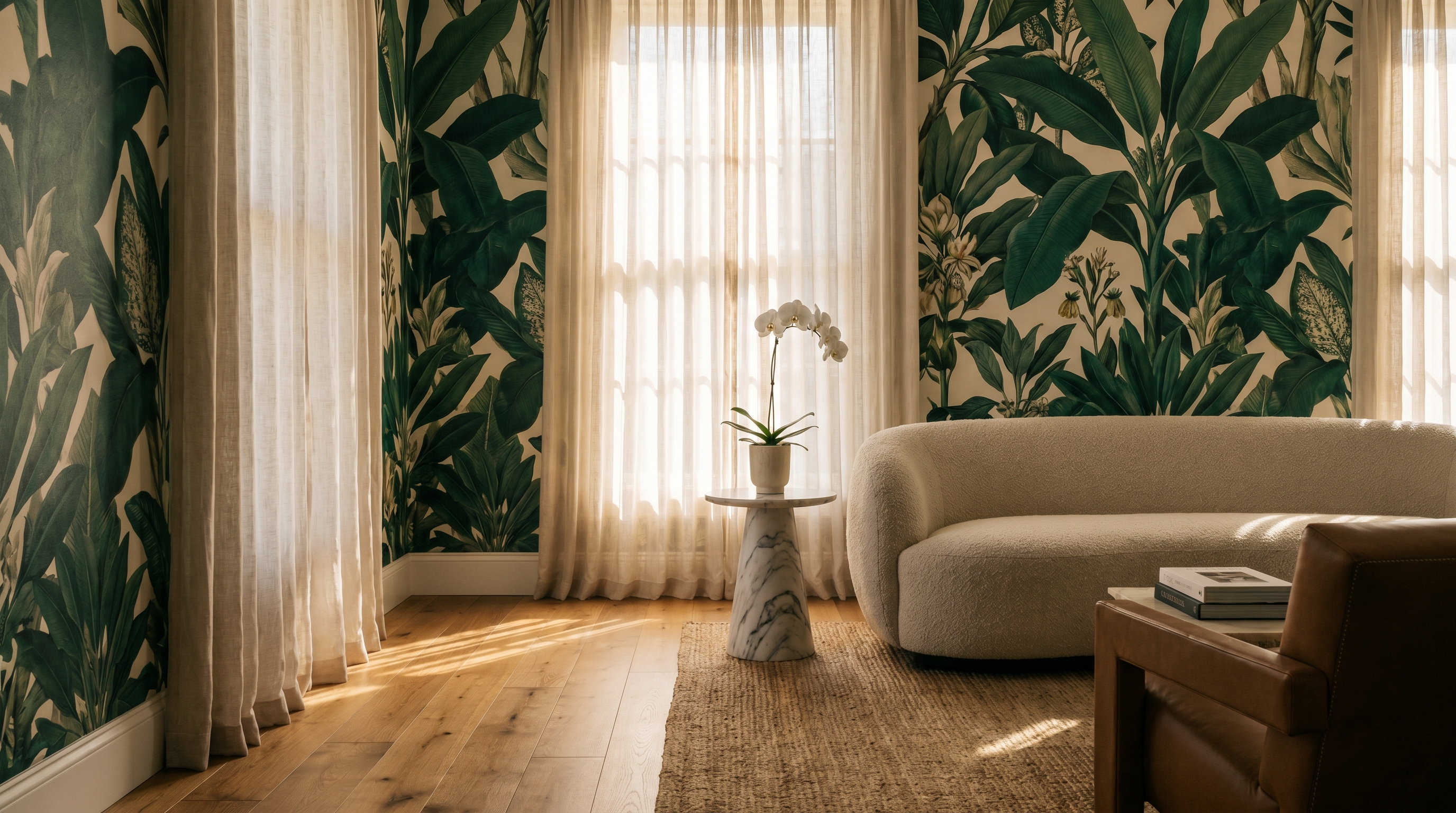
Pattern and depth. Paint produces colour and sheen. Wallpaper produces pattern, texture, and visual depth at a scale and consistency that no paint technique reliably replicates. A forest-green wall and a forest-green botanical wallpaper are not comparable products: one is a coloured surface; the other is an environment.
Longevity. A quality paste-the-wall paper, properly installed on prepared surfaces, lasts fifteen to twenty years. A painted wall in an occupied room typically needs repainting every three to five years. On a total-cost-of-ownership basis over ten years, a mid-range wallpaper (£40–£80 per roll) often works out cheaper than three repaints of the same surface.
Hiding imperfect walls. Wallpaper — particularly a thick, embossed, or heavily patterned paper — conceals minor wall imperfections that paint emphasises. A raking light source across a painted wall will reveal every minor dent, historical fill point, and slight undulation. The same wall papered will show none of them. If your plasterwork is imperfect and skim-coating is not in the budget, a lining paper followed by a patterned top paper is frequently the better solution.
"A painted wall is a surface. A wallpapered wall is an environment. They are not substitutes for each other."
The single-wall impact. A single papered feature wall makes a room feel more designed than four freshly painted walls. This is not a matter of opinion — it is observable in how quickly people register the presence of wallpaper when entering a room. Paint is background; wallpaper is foreground. For anyone working within a budget, one papered wall delivers more decorative return per pound than four painted ones.
Acoustic and thermal performance. Wallpaper — particularly embossed, fabric-backed, or textured papers — adds a slight degree of thermal insulation and sound absorption to a wall. The effect is modest, but in rooms used for calls (a home office), recording (a podcast setup), or simply occupied for long periods, the acoustic difference between a smooth painted room and a textured-paper room is measurable.
Room-by-room guidance
| Room | Recommended approach | Why |
|---|---|---|
| Living room | Wallpaper — feature wall or all four | Longevity and visual impact justify the cost; the room is used daily and seen by guests |
| Bedroom | Wallpaper — behind-bed wall minimum | Pattern and warmth improve the environment; the anchor wall makes a strong focal point |
| Hallway | Wallpaper | High-traffic scuffs show on paint; durable wallpaper lasts longer and makes a strong first impression |
| Kitchen | Paint for most surfaces, wallpaper on the dining end | Cooking zones need washable surfaces; a dining or breakfast area can take a feature paper |
| Bathroom | Paint as default; moisture-resistant paper if ventilated | Humidity is the limiting factor; good ventilation opens up wallpaper as a viable option |
| Children's room | Peel-and-stick or feature wall in washable paper | Tastes change; limit commitment with one wall or removable paper |
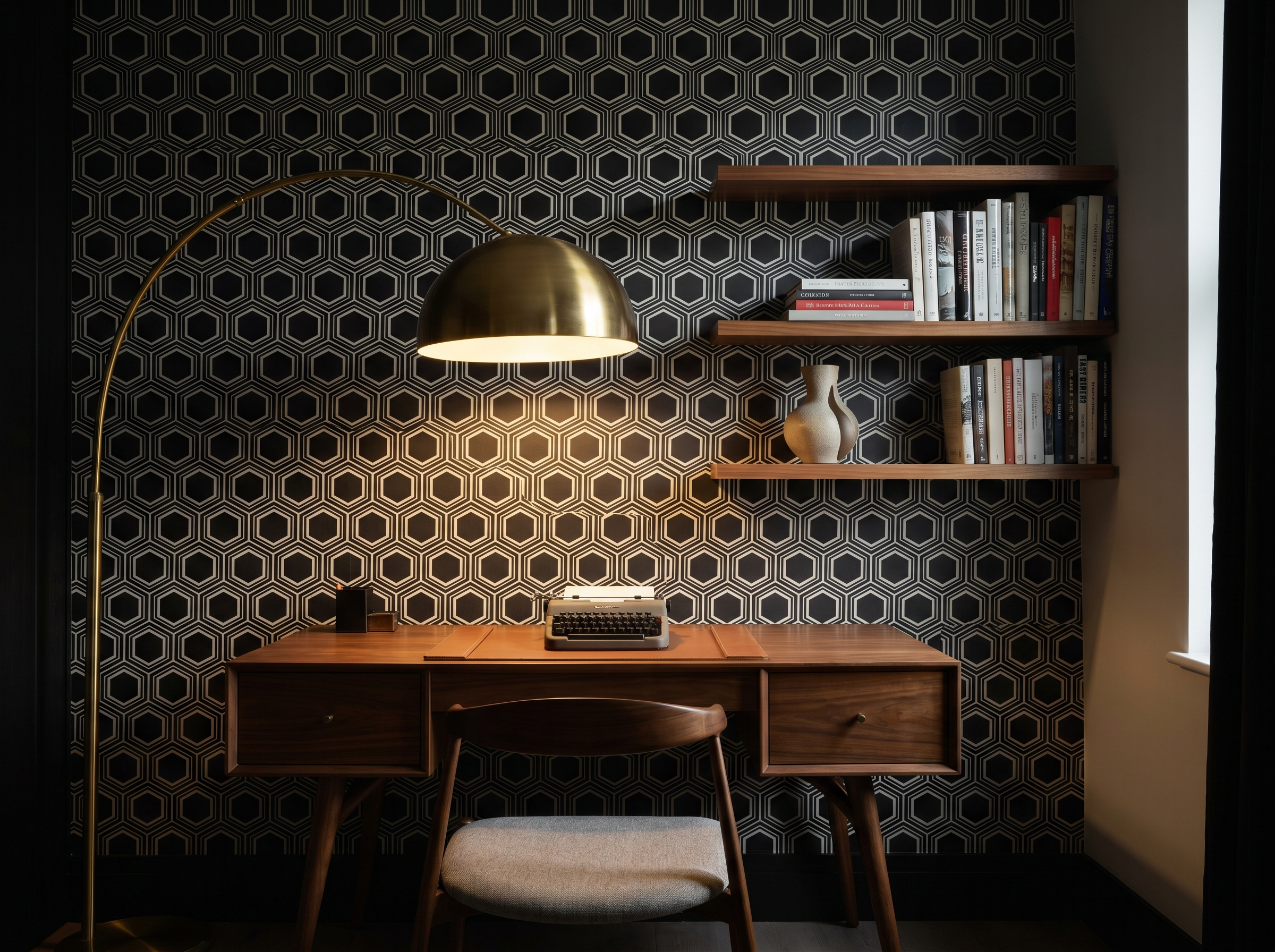
| Home office | Wallpaper — especially the camera wall | Deep colours support focus; strong backdrop improves professional appearance on video |
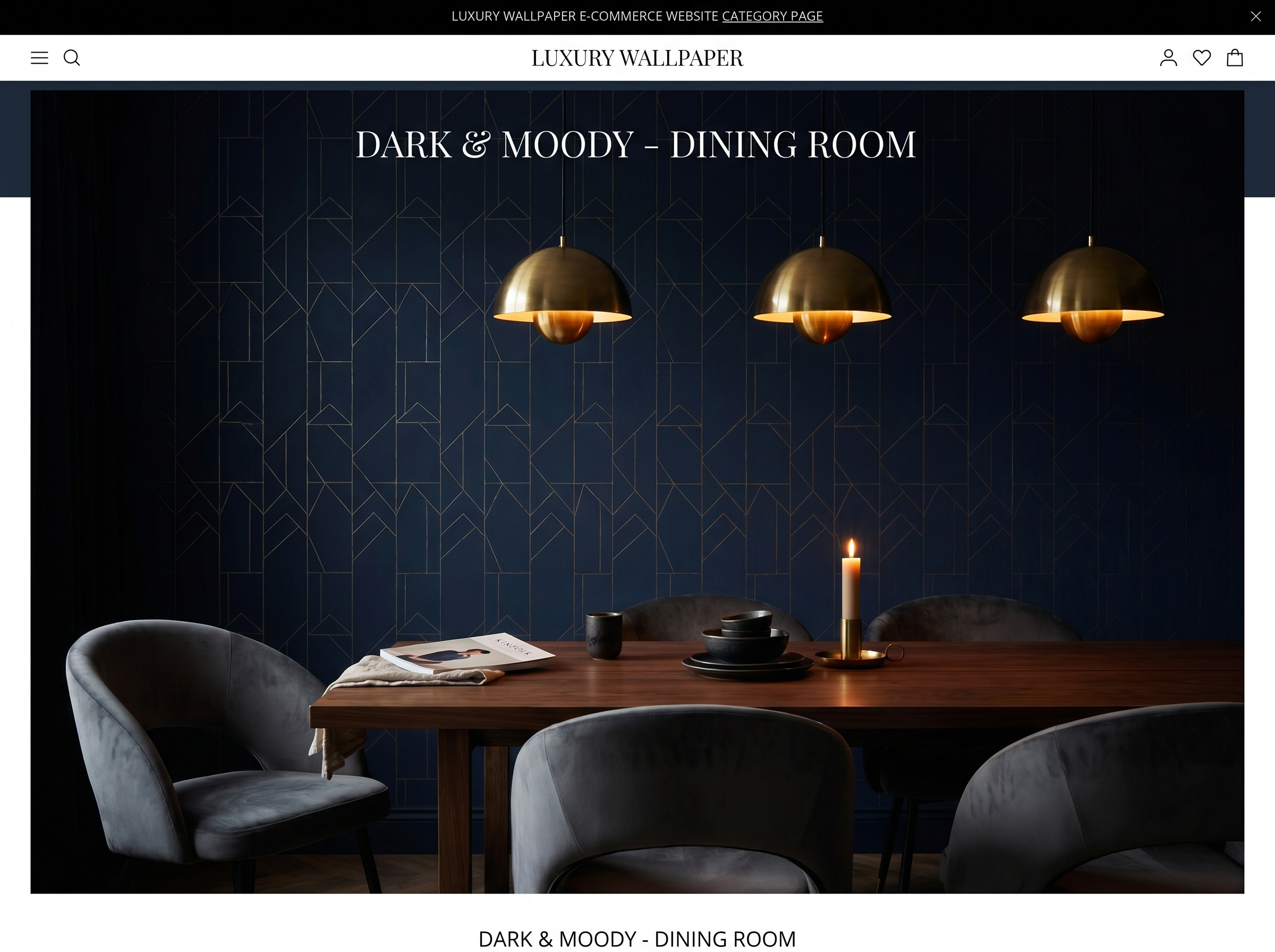
| Dining room | Wallpaper — four walls or feature wall | Sustained close-range viewing rewards pattern; lamplight makes bold papers look extraordinary |
| Ceiling | Paint, almost always | Wallpapering ceilings is difficult; the benefit rarely justifies the effort except in small, low-ceilinged rooms |
The combined approach: wallpaper and paint together
The most sophisticated rooms usually use both. The standard combined approach: wallpaper the focal wall (behind the bed, behind the sofa, opposite the door) and paint the remaining walls in a colour pulled from the paper's palette. This creates a cohesive tonal environment where the paper is clearly the focal point and the painted walls support rather than compete with it.
Avoid painting the surrounding walls bright white unless the wallpaper specifically requires it. White creates a high-contrast cut between the paper and the rest of the room that makes the paper look applied rather than integrated. A warm off-white, a tone pulled from the paper's background, or a muted mid-tone from the palette will look significantly more considered.
Pro tip: The combined approach in practice — Order a sample of your chosen wallpaper before selecting a paint colour. Hold the sample against the wall in your room's actual lighting, then choose a paint colour from a tone already present in the paper. Most wallpaper brands offer colour-matched paint or include a palette card with their papers. This is the most reliable method for avoiding a paint-paper mismatch.
Cost comparison
| Item | Paint (mid-range) | Wallpaper (mid-range) |
|---|---|---|
| Materials per room (4 walls, 12m²) | £60–£120 for paint + primer | £200–£500 for paper + paste + lining |
| Professional installation, per room | £150–£350 (decorator) | £300–£600 (wallpaper hanger) |
| DIY time | 1–2 days | 2–4 days |
| Expected lifespan | 3–5 years before refresh | 10–20 years |
| 10-year cost (professional) | £600–£2,100 (2–3 repaints) | £500–£1,100 (one hang) |
The ten-year comparison reveals the most common misunderstanding about wallpaper costs: it appears more expensive because the upfront cost is higher. But wallpaper that lasts fifteen years and requires no maintenance over that period almost always costs less than three repaints of the same surface.
Start with a sample before you decide
Order a sample of your shortlisted wallpaper and live with it on your wall for a week before committing. It is the most reliable way to know whether it is right for the room.
Order a sample →James Whitfield
James is a London-based design writer who covers materials, interiors, and the spaces where people make things.
Continue reading
Never miss a story