Inside Rebel Walls: the Swedish studio redefining the mural
We sat down with Rebel Walls' creative director to talk about their process, their love of imperfect nature, and what's coming in 2027.
Rebel Walls began in a small studio outside Stockholm in 2007 with a simple idea: that photographic-quality murals should be accessible to anyone decorating their home, not just clients with luxury budgets. Nineteen years later, they're one of the most recognised names in the global wallpaper industry, stocked by retailers in over 40 countries and specified regularly on high-end residential and hospitality projects.
We spoke with Creative Director Anna Lindqvist about process, philosophy, and what comes next.
The interview
Murall: The studio started with a focus on photographic murals. How has that evolved?
Anna Lindqvist: We started with photography because that's what the founders had access to — a library of beautiful nature images and a vision for how they could look on a wall. But very quickly we moved toward illustration and original artwork, because we realised that the best murals don't try to recreate a photograph. They create a feeling. They're somewhere between reality and imagination.
Today, probably 60% of our catalogue is original illustration. We work with artists from all over the world — Sweden obviously, but also Japan, Brazil, the UK, Australia. The brief is always the same: give us something that rewards a second look. Something with depth.
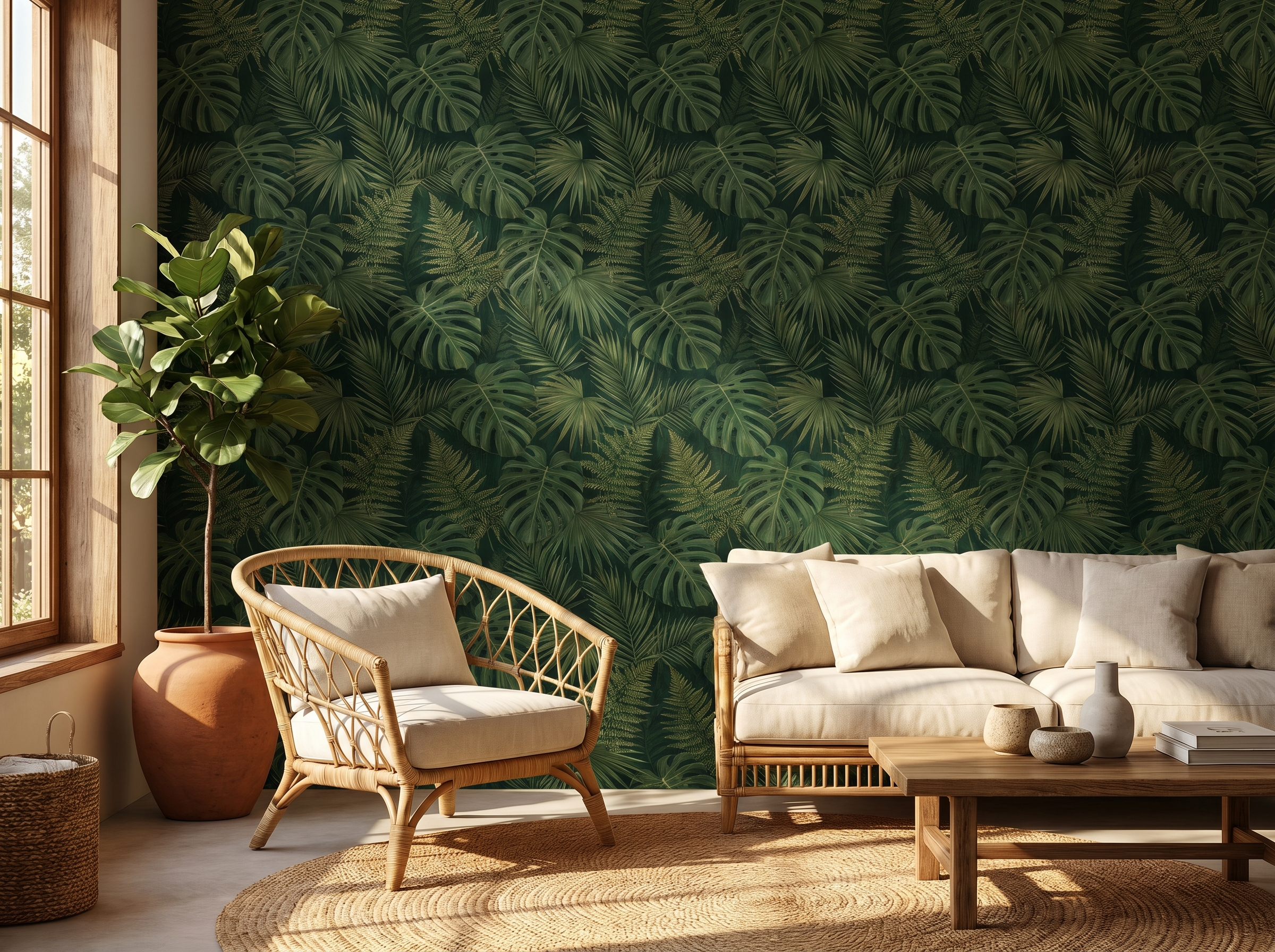
Murall: The Verdant Canopy series has been extraordinary — it's our bestselling design by a considerable margin. What was the thinking behind it?
Anna Lindqvist: Verdant Canopy came from a brief we gave to one of our Swedish illustrators: paint a forest from inside it. Not from outside looking in — from within the canopy, looking up and around. The original artwork took about eight weeks. We printed it, lived with it, changed the palette three times. The version you see today is the fourth iteration.
What makes it work, I think, is that it's not photorealistic. It has brushstroke quality — you can feel the hand of the artist. And the colours are heightened just slightly beyond what you'd see in nature. The greens are a little richer, the light is a little warmer. It's nature as it exists in memory, not on a screen.
"The best murals don't try to recreate a photograph. They create a feeling — somewhere between reality and imagination."
Murall: How do you approach sustainability? It's something customers ask about increasingly.
Anna Lindqvist: It's been central since day one, actually. All our papers are printed on FSC-certified non-woven substrate using water-based inks. We print to order — every roll we produce has already been sold, so we have virtually zero inventory waste. Our Stockholm facility runs on 100% renewable energy.
We're currently working toward full B Corp certification, which we expect to complete by the end of 2026. It's a rigorous process, but it forces you to audit everything — supply chain, packaging, employee welfare — and that's been genuinely valuable even beyond the certification itself.
Murall: What's coming in 2027?
Anna Lindqvist: I can't give you specific designs, but I can tell you the direction. We've been obsessed lately with the space between macro and micro — things that read as one thing from across the room and something completely different up close. Patterns within patterns. Textures that reward proximity.
We're also exploring a collaboration with a ceramicist whose work we've admired for years. The idea is to translate surface qualities — the matte depth of a particular glaze, the micro-texture of raw clay — into a wallpaper substrate. It sounds conceptual, but the early samples are extraordinary.
Murall: Final question — what's the one thing you'd tell someone who's nervous about choosing a mural?
Anna Lindqvist: Order a sample. Always, always order a sample. The difference between seeing a design on a screen and seeing it on your actual wall, in your actual light, next to your actual furniture — it changes everything. We've had customers who fell in love with a design online and then fell out of love with it on a sample. And customers who were unconvinced online and fell completely in love with the physical sample. The screen doesn't tell the truth. The paper does.
James Whitfield
James is Murall's product editor and a qualified interior architect. He has overseen wallpaper specifications on residential and hospitality projects across Europe.
Never miss a story