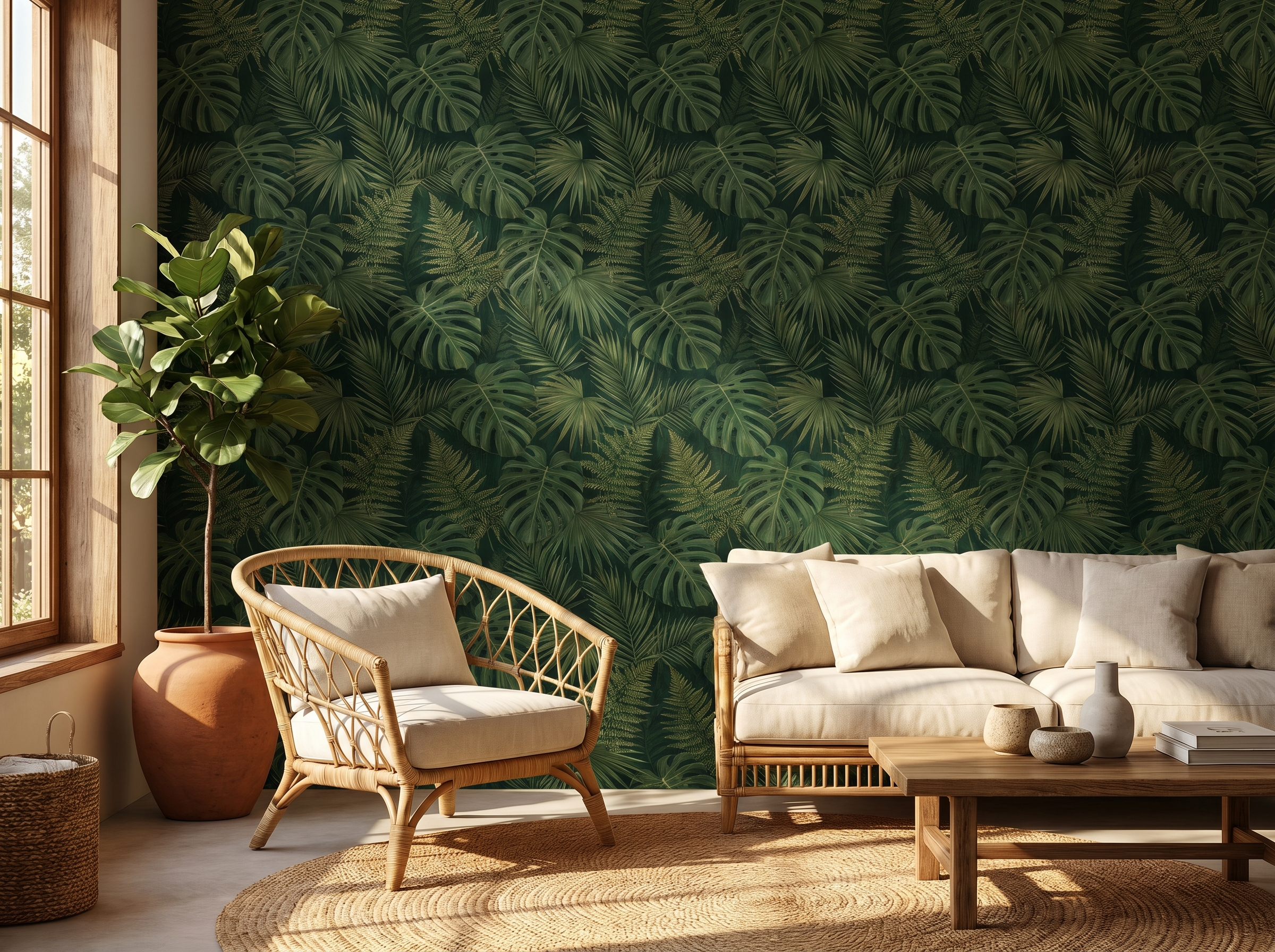
Kids' Room Wallpaper Ideas: 12 Designs That Actually Last
The hardest wallpaper brief isn't 'make it beautiful' — it's 'make it beautiful for a five-year-old and still work when they're twelve.' These 12 ideas solve that problem.
Children's rooms are where most parents make their bravest wallpaper choices — and their most expensive mistakes. A mural of cartoon characters that your four-year-old loves today will be the source of profound embarrassment by the time they are eight. The solution is not to play it safe. It is to choose designs with longevity built in: patterns and motifs that shift in meaning as the child does, or feature-wall strategies that allow for low-cost updates as tastes evolve.
The practical case before the aesthetic one
Before aesthetics, three practical questions determine everything in a children's room.
Washability. Children mark walls. Whether it is a crayon line at shoulder height, a sticky handprint, or the aftermath of an ill-advised painting project, the wallpaper in a children's room will be cleaned. Vinyl-coated and vinyl-backed papers are the most durable — look for 'scrubbable' on the specification. Unpasted natural-fibre papers like grasscloth are beautiful in adults' rooms; they have no place in a nursery.
VOC levels. The bedroom is where children spend the most time, and many wallpapers and adhesives off-gas volatile organic compounds (VOCs) during and after installation. Look for papers with Oeko-Tex certification or low-VOC adhesives. Water-based paste is always preferable to solvent-based in a child's room.
The change budget. Young children's tastes evolve quickly. If your child is four and passionate about a specific theme, budget for the likelihood of repainting or re-papering within five years. A feature wall — one wall only — limits that cost to roughly a quarter of a full-room commit. Peel-and-stick panels are the most economical solution for guaranteed short cycles.
1. The illustrated world map
A detailed illustrated map — the kind with drawn ships in the oceans and illustrated mountains at the borders — is the most reliably long-lived choice in a children's room. Toddlers like the pictures. School-age children learn from it and trace their fingers along coastlines. Teenagers use it as a planning wall for where they want to go. It works in navy on cream, olive on stone, or dusty pastels depending on the room's palette. Hang it on a single wall at eye level — children's eye level, not yours.
2. The woodland
Foxes in ferns, owls in oak trees, deer between birches: the illustrated woodland is a perennial because it is warm without being infantile. The best versions avoid the cartoonish and sit closer to illustration — think Scandinavian children's book art rather than nursery decal. Choose a paper with enough detail to reward close inspection and enough negative space to avoid overwhelming the room. Greens, ochres, and earthy taupes age better than primary colours.
3. Celestial — stars, moons, and constellations
Stars and constellations on a deep navy or midnight blue work from nursery to mid-teen years without feeling juvenile at any point. The nocturnal palette also has a practical advantage: it makes a room feel cosy and contained, which supports sleep. Detailed star-chart papers — with actual constellation names printed — add an educational layer that children grow into rather than out of. Pair with brass or warm-gold lighting to make the whole thing glow.
"The best children's room wallpaper grows with the child rather than dating with the phase."
4. Bold geometric
A large-scale geometric — hexagons, chevrons, overlapping diamonds — reads as graphic and considered rather than 'childish'. Younger children respond to the strong shapes; older children and teenagers read it as a design choice rather than a decoration. The key is scale: small, busy geometrics feel restless; large, confident ones feel architectural. Monochrome or limited-palette geometrics are more durable than multicolour versions.
5. Abstract paint-effect
Large-scale abstract brushstrokes, paint-splash prints, or watercolour wash papers are the most adult-looking children's room option while still feeling playful. A bold abstract in terracotta and off-white reads as sophisticated to an adult eye and exciting to a child's. These papers often look better as the room is styled over time — they work with more furniture and objects as the room fills.
6. The mural panel behind the bed
Rather than a patterned repeat across the whole room, a single scenic mural — a rainforest, a mountain range, a cityscape — on the wall behind the bed creates a strong focal point without committing every surface. Mural panels from Swedish brands like Rebel Walls and Photowall are typically printed to order and designed to fill an exact wall measurement, so there is no pattern-matching waste. They also remove cleanly from most plastered walls, which matters when tastes change.
7. Micro-pattern — the subtle option
A fine, all-over micro-pattern — small stars on cream, a tonal ditsy floral, tiny geometric dots — adds texture and warmth to a children's room without asserting itself. These papers are the safest long-term choice because they recede; the furniture and accessories carry the personality, and the wallpaper simply provides a considered background. They are also the easiest to live with through changing tastes and age-related re-decorating.
8. The transport theme — done carefully
Trains, planes, and maps of imaginary railways are among the most requested children's wallpapers — and among the most quickly dated. The way to avoid this: choose illustrated versions rather than photographic or plastic-looking graphic prints. An ink-drawn train on aged paper, or a hand-lettered adventure map, has a quality of illustration that outlasts the transport obsession phase. Avoid anything that looks like it belongs on a duvet cover.
9. Stripes
A wide, confident stripe — not the pinstripe of a formal study, but a broad 15–20cm alternating stripe — is one of the most adaptable choices in a children's room. It reads as graphic rather than decorative, works with almost any furniture colour, and is equally appropriate at five and fifteen. Vertical stripes emphasise ceiling height, which makes small rooms feel less confined. Colour combinations matter: sage and cream last; bright primary stripes date quickly.
10. Dinosaurs — but the right kind
Dinosaur wallpaper is a rite of passage, and for good reason: children love them, and they are genuinely interesting to look at. The long-lived versions are botanical-style illustrations — think specimen-print dinosaurs drawn with the precision of Victorian natural history plates, set against a cream or mushroom ground. These look almost like an adult wallpaper that happens to feature dinosaurs. The short-lived versions are cartoon-rendered and bright. The former can survive into early teenage years; the latter cannot.
11. The feature wall strategy
For any parent uncertain about longevity, the feature-wall approach limits both the financial and decorative risk. Paper the wall behind the bed — typically the most impactful wall — and paint the remaining three in a complementary tone pulled from the paper. When tastes inevitably change, repainting three walls is a weekend job. Repapering the fourth is manageable. Repapering all four is a project.
Pro tip: The feature wall budget calculation — A standard children's bedroom wall (roughly 3.6m wide × 2.4m high) takes approximately 5–7 rolls to paper, depending on pattern repeat. At £30–£70 per roll for a mid-range paper, that is £150–£490 for the focal wall versus £600–£2,000 for the whole room. The feature wall approach costs a quarter as much and delivers most of the visual impact.
12. Peel-and-stick for the uncertain
If you know the phase is temporary — a nursery that will become a toddler room within two years; a five-year-old whose interests change monthly — peel-and-stick wallpaper removes the permanence anxiety. The adhesive quality has improved significantly in recent years; good peel-and-stick papers now hold cleanly on most painted surfaces for three to five years without peeling at the seams. They remove without soaking and rarely damage plaster when taken down carefully. The limitation is print quality: the best peel-and-stick papers are not equal to the best paste-the-wall papers in richness of colour or surface texture.
What to avoid
Character licensing. Wallpaper featuring the specific characters your child is currently obsessed with — a superhero franchise, an animated series — will be obsolete within eighteen months and unavailable in any shop. Use posters for that kind of expression; they are designed to be temporary.
Very pale, non-washable papers on any wall below shoulder height. Light coloured grasscloth and natural-fibre papers in particular cannot be cleaned. The lower third of a children's room wall will be touched, leaned against, and occasionally drawn on. Reserve delicate papers for the upper walls or for rooms used by older children.
Full-room loud colour. A room that is entirely bright red, lime green, or high-saturation anything affects sleep quality and becomes visually overwhelming quickly. Bold colour choices work best as a single-wall decision against quieter surrounding tones.
Find wallpaper that lasts the growing years
Browse our curated selection of durable, design-led papers for children's rooms — all sourced from makers who prioritise both quality and washability.
Browse kids room wallpaper →Sofia Laurent
Sofia is a Paris-based interiors writer and contributing editor at Murall Journal. She covers trend, design culture, and the spaces that shape us.
Continue reading
Never miss a story